The strongest tornado in Comanche County’s record is an F4 on May 24, 1957, which killed 4 people. From 1950 through 2025, 67 tornadoes touched the county, according to NOAA’s Storm Prediction Center (SPC). Two of them were rated F3/EF3 or stronger.
Deadly tornadoes since 1950
The 1957 F4 injured 5 people on a 21.6-mile path that also crossed a neighboring county.
April 10, 1979 brought two deadly tornadoes on the same day:
- an F3 that killed 3 people and injured 100, on a short 4.5-mile path recorded only in Comanche County;
- an F2 that killed 1 person, on a 74.1-mile path that crossed between Oklahoma and Texas.
Tornadoes in the county’s record caused 8 deaths in all. Deaths and injuries here are counted along each tornado’s full path.
Quieter recent years
From 2016 through 2025 the county had 9 tornadoes, none rated EF3 or stronger. Four tornadoes in the full record have no known rating. Weak tornadoes from the early decades were also undercounted. So the older part of the list is less complete than the recent part.
Clay at the surface
About 35% of Comanche County’s mapped land has soils rated high or very high for shrink-swell, clay that swells when wet and shrinks as it dries. What sets the county apart is how much of that clay sits right at the surface. That is about 11.5% of mapped land, the largest share of any county on this site. The most widespread of these soils is mapped as Foard and Tillman soils, about 84,900 acres. Ask installers how their price and method account for clay ground at your address, since the survey describes the county, not one yard.
Registering a shelter
Ask your installer to confirm how to register your shelter with Comanche County Emergency Management. For permits, floodplain rules and prices in the city, read storm shelters in Lawton.
Before you request a quote
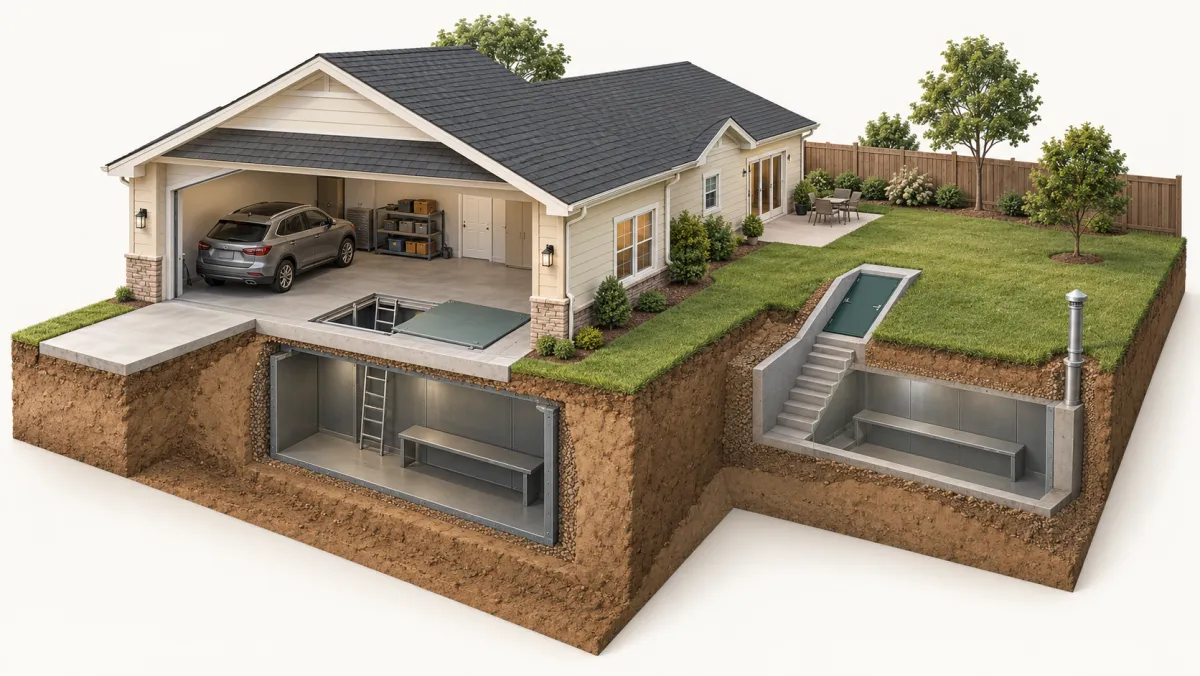
Decide roughly where you would put a shelter, in the garage or the yard. Then ask the installer to see that spot. Ask for a quote listing the unit and installation work separately. Have the installer confirm any permit needed and its fee. Ask who will file the shelter registration.