Noble County’s record shows 48 tornadoes from 1950 through 2025, and none was rated F3. The county also has about 43% of its mapped land rated high or very high for soil shrink-swell. Only one tornado in the whole record caused deaths, according to NOAA’s Storm Prediction Center (SPC).
Two F4s, eight years apart
- April 26, 1991: a 66-mile path through Garfield, Noble and Osage counties. No one died, and 6 people were injured. It is also on the Garfield County page.
- May 3, 1999: a 35-mile path through Logan, Noble and Payne counties. It killed 2 people and injured 26. See Logan County and Payne County.
Each track has a whole-path rating and casualty count.
The rest of the record
The recent decade, 2016–2025, accounts for 7 tornadoes in this record. All were below EF3. SPC also flags two historical ratings as estimates based on damage and path length.
Clay under almost half the county
About 43% of Noble County’s mapped land has soils rated high or very high for shrink-swell. These soils gain volume when wet and lose it as they dry. Only 3% is very high. Very little ground is rated low, about 6% of mapped land, so most of the rest is moderate.
Almost all of the high ratings come from deeper layers, not the surface. The largest high-rated area is the Grainola-Lucien complex, 34,415 acres on 5–12% slopes. Bethany and Kirkland silt loams add more than 40,000 acres between them. The map covers the whole county and does not describe one property.
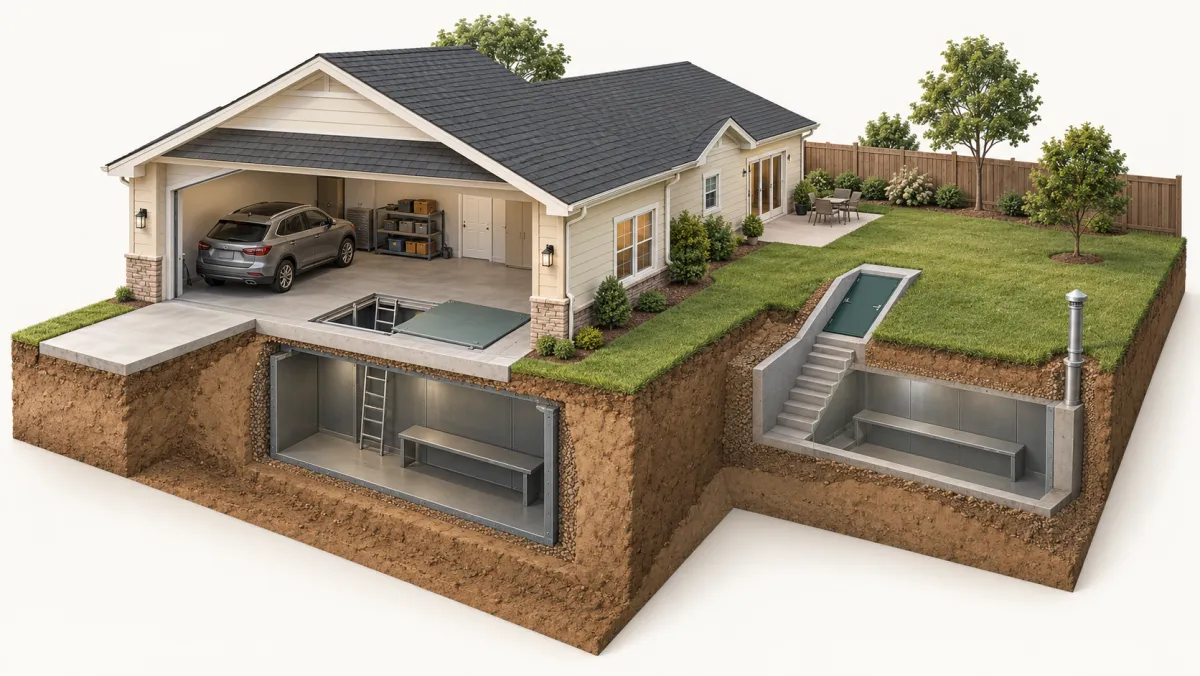
This matters for an in-ground shelter and for slab homes. Ask the company how it will account for the soil at your shelter site. For the city, see storm shelters in Perry and foundation repair in Perry.
A property tax break for your shelter
Up to 100 square feet of a storm shelter added after January 1, 2002 is exempt from property tax. This is in the Oklahoma Constitution. To claim it, file form OTC 905 with the county assessor.
- File by March 15 to get the exemption for that tax year.
- You must own the property on January 1.
- The form asks for the shelter’s type, size, construction, location, install date and cost.
Ask your installer for these details on the invoice, and keep a copy.
Getting a free quote
Ask for an installer to visit and check the spot before it prices the job. The written quote should show these as separate lines:
- the shelter, with its size in square feet for the tax form
- any permit needed for your shelter, who will pull it and the fee
- the digging and dirt hauling
Use the Oklahoma storm shelter cost ranges to prepare for that visit.
Frequently asked questions
Is the May 3, 1999 tornado on this page the same one listed for Logan County?
Yes. That F4 ran 35 miles through Logan, Noble and Payne counties. Its 2 deaths and 26 injuries are counted for the whole path.
Do I have to apply for the shelter tax exemption every year?
No. Once the county assessor grants it, it stays in place. It ends if the property is sold or otherwise changes hands.
Is the SoonerSafe rebate open for Noble County?
As of October 2026, Oklahoma Emergency Management says the 2026 SoonerSafe program is not open.
Sources
- SPC Severe Weather Database: tornadoes 1950-2025 (NOAA Storm Prediction Center)
- Soil Data Access, SSURGO survey data (USDA NRCS)
- Oklahoma Constitution – Article X – Revenue and Taxation
- OAC 710:10, Chapter 10. Ad Valorem
- Storm Shelter Exemption Application, OTC 905, Revised 7-2016
- SoonerSafe Safe Room Rebate Program (Oklahoma Emergency Management)