Growing cracks, stair-step cracks in brick and cracks alongside sticking doors deserve a repair company’s assessment. Photograph the crack and record its width before the visit.
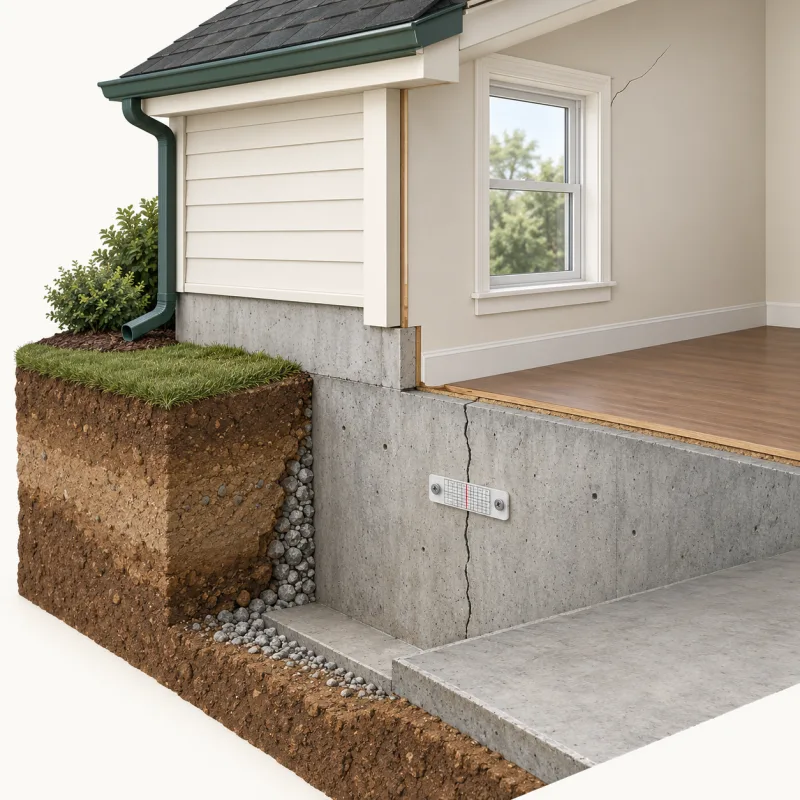
Reading the crack: shape, place and width
The ASCE Texas Section guideline says engineers should consider a crack’s physical features when judging structural damage. Use the patterns below to describe what you see to the repair company.
| What you see | What it can point to | Next step |
|---|---|---|
| Thin foundation crack | Concrete curing or minor settling, as described by the Colorado guide | Mark it and watch it |
| Crack at a wall corner, above a door or above a window | Soil movement | Track it; have it checked if it grows |
| Stair-step crack in brick, following the mortar | Soil movement | Have a repair company assess it |
| Chimney cracking or pulling away from the wall | A damaged chimney | Keep clear of it; have it assessed right away |
Thin and hairline cracks. A 1987 Colorado state geology guide says almost every house has some foundation cracks. It puts curing and minor-settling cracks at about 1/8 inch wide or less.
Concrete floors. ASCE’s homeowner guide lists cracks in a concrete floor 1/16 inch across or wider as one sign of soil movement. It is a sign to note and track, not an alarm.
Brick. ASCE describes diagonal or stair-step cracks through brick or mortar as possible signs of movement. Record where the crack starts and which path it follows.
Chimneys. The Colorado guide calls a damaged chimney very dangerous. Keep clear of a cracking or separating chimney and arrange an assessment promptly.
Why cracks come and go on Oklahoma clay
Clay soil swells when it gets wet and shrinks when it dries. ASCE says those moisture changes push foundations up and down. Watch whether the crack changes during dry and wet weather.
USDA survey estimates show how common this soil is. High or very high shrink-swell soil covers 43.1% of mapped acres in Washington County, 39.9% in Rogers County and 22.7% in Oklahoma County. “Shrink-swell” means how much the soil grows and shrinks with water. The figures cover whole counties, rural land included, but they explain why a local company that knows this clay is worth asking. See the Bartlesville and Claremore pages for local permit details.
How to measure and track a crack
Record both the width and any change over time. ASCE advises watching existing cracks for movement that builds up or comes back with the seasons. Keep a simple record at home:
- Draw a short pencil line across each end of the crack. Write the date next to it.
- Hold a ruler or tape measure across the widest point and photograph it.
- Take the photo from the same spot, in the same light, each time.
- Check once a month, and again after a long dry spell or a wet week.
- Write down any new cracks, sticking doors or gaps at window frames nearby.
A crack that runs past your pencil mark has grown. So has one that gets wider on the ruler. Either one moves it from “watch” to “have it looked at.”
When a crack is urgent
The ASCE Texas guideline lists signs that may mean a structure has lost strength. They include excessive sagging, partial collapse and badly deteriorated material. If you see any of these, keep people away from that part of the house and call emergency services. If you smell gas, leave first and call from outside.
What crack repair looks like and costs
The ASCE Texas guideline describes epoxy injection for slab cracks of about 1/32 inch and larger to restore stiffness. If the only goal is to keep out water or insects, a sealant may do. Ask the company which purpose its proposed crack repair serves.
HomeGuide’s July 2025 national guide puts non-structural crack repair at $250–$800 or more per crack. Ask for a separate price for any work to address foundation movement.
A crack can be a symptom of soil movement rather than the problem itself. Ask the company whether it plans to treat the crack, the movement behind it, or both. Arrange an on-site assessment before choosing a crack treatment. If the cause is unclear or two companies disagree, an independent structural engineer can give a second opinion. Common repair prices are on the foundation repair cost page. The foundation warning signs page covers the other signs that can come with a crack.
Getting a crack looked at
When a crack keeps growing or shows up with other signs, use the quote form to request an on-site assessment from a local repair company. Bring your dated photos and pencil marks. Ask for the quote to spell out:
- what the company thinks caused the crack;
- whether it will inject, seal or leave the crack;
- any drainage or soil-moisture work;
- whether a permit is needed, who will get it and its fee.
Questions to ask a repair company
For a major repair, or if the problem is unclear, will a licensed engineer review the plan?
Engineering guidelines describe an engineer's evaluation as the way to tell cosmetic cracks from structural damage. ASCE Texas Section guidelines (2022)
What is causing the movement, and what will be done about the water?
On shrink–swell clay, keeping soil moisture even around and under the foundation is the main way to reduce movement, so drainage and leaks matter as much as the repair. ASCE Geo-Institute, Living With Shrink/Swell Soils (2022)
Will the plumbing be tested after lifting, and who pays if a leak is found?
Engineering guidelines call for leak tests of water and sewer lines after a foundation is lifted. ASCE Texas Section guidelines (2022)
Will you measure floor levels before and after the repair?
Engineering guidelines call for an elevation survey after the work, which gives you a before-and-after record. ASCE Texas Section guidelines (2022)
Is the warranty in writing, what does it exclude, and does it transfer if I sell the house?
The FTC notes that a warranty won't necessarily cover all situations or repairs and advises getting spoken promises in writing. FTC, Warranties
Does this job need a city permit, and who will get it?
Oklahoma's Construction Industries Board tells homeowners to check whether a permit is needed and to see it before work begins. Oklahoma CIB, Home Repair Tips
Can I get three written estimates for the same plan?
Oklahoma's Construction Industries Board and Emergency Management recommend at least three estimates based on the same specifications. Oklahoma CIB, Home Repair Tips
Frequently asked questions
Should I fill a crack before anyone looks at it?
Photograph and mark it first. Ask the company whether to leave it visible until the assessment.
Does a crack in the garage slab mean the house foundation is failing?
Record its width and whether the two sides are at different heights. Share those details with a repair company, especially if cracks also appear indoors.
My crack opens in summer and closes in spring. Is that normal?
Soil moisture changes can move a foundation. Keep photos of the crack in different seasons and ask the repair company to explain the pattern.
Can a cracked wall be patched and painted after the repair?
Ask the repair company when to patch and paint. Have it state whether drywall and trim work are included in your quote.
Sources
- Living With Shrink/Swell Soils — A Homeowners' Guide to Maintenance of Shallow Foundations, Version 2 (2022) (ASCE Geo-Institute)
- Guidelines for the Evaluation and Repair of Residential Foundations, Version 3 (2022) (ASCE Texas Section)
- Special Publication 14, Home Landscaping and Maintenance on Swelling Soil, 1987 (Colorado Geological Survey)
- Soil Data Access, SSURGO survey data (USDA NRCS)
- How Much Does Foundation Crack Repair Cost? (2026)